









Executive
Summary
POV PLAN


Business Drivers
“ABC Healthcare is evaluating XYZ Platform to reduce shipment visibility delays across EMEA operations. The PoV will
validate operational visibility improvements, exception handling workflows, and integration with SAP and carrier APIs.”
This section should explain the business problem in plain English. If an executive cannot understand why the PoV exists after
reading this section, the PoV is already drifting into technical theatre
(Example)
Cost
Reduction
(Example)
Operational
Efficieny
(Example)
Risk
Reduction
Stakeholder Aligment
(list all stakeholders requirements succinctly.
VP of Operations: Delayed Shipments & Faster exception resolution
Secuirty Team: Third-Party access & auditable controls
IT Team: Intergration compexity & minimal operational overhead
Note: A PoV without stakeholder alignment is simply a technical experiment with a meeting invite.
Success Criteria
Use Case #1
Business Impact
Validated Features
Achieved?
(Yes/No)
Use Case #2
Business Impact
Validated Features
Achieved?
(Yes/No)
Operations staff
can identify
delayed cold-chain
shipments within 5
minutes.
Reduced spoilage
risk and SLA
penalties
Real-time tracking,
exception alerts,
workflow
automation.
Achieved?
(Yes/No)
Technical Objectives
Validate SAP
integration.
Achieved?
(Yes/No)
Validate SSO
integration.
Achieved?
(Yes/No)
Timelines & Phases
Intrgration Diagram with key systems and data flows
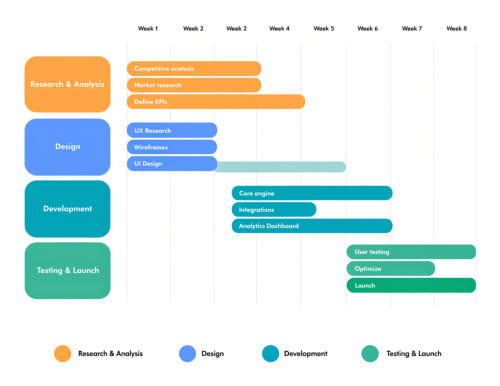
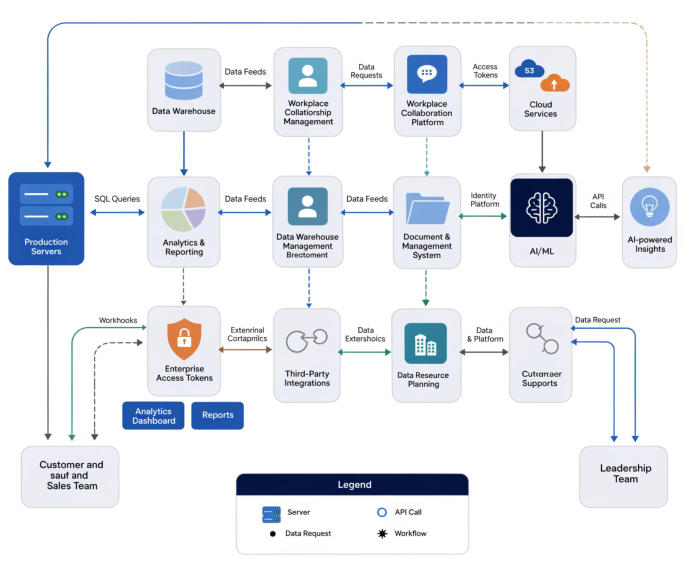
The PoV Plan is the document that transforms Discovery into Execution. It is the structured summary of everything learned during the
sales process, bringing together the business drivers, operational challenges, technical requirements, stakeholder expectations, success
criteria, timelines, and agreed use cases into a single aligned plan. A good PoV Plan should explain not only what is being tested, but why
it matters, who it matters to, and what successful outcomes look like. It should progressively flow from high-level business objectives
down into operational workflows, technical validation points, integrations, and ultimately the specific product capabilities being
demonstrated or validated. The plan may also include project phases, timelines, responsibilities, risks, dependencies, and future roadmap
considerations, ensuring everyone involved understands both the immediate objectives and the broader strategic direction.
None of this information should appear out of thin air. The PoV Plan is built from the Discovery process itself. It is the written
manifestation of the conversations held with stakeholders throughout the opportunity lifecycle. The business drivers come from
executives and sponsors. Operational requirements come from the teams who live with the day-to-day pain. Technical objectives come
from architects, administrators, security teams, and implementation staff. Commercial constraints and timelines often come from
procurement, finance, or programme leadership. In many respects, the PoV Plan acts as a filtering and alignment mechanism,
consolidating fragmented conversations into a shared understanding of what the organisation is actually trying to achieve. If Discovery
has been weak, shallow, or feature-led, the PoV Plan will expose those weaknesses almost immediately.
The target audience for the PoV Plan is therefore much broader than just the technical team. Executives may use it to validate business
alignment and justify investment. Project managers may use it to track ownership, timelines, and milestones. Technical teams may use it
to understand integrations, dependencies, and success criteria. Sales and Presales teams use it to maintain alignment and protect the scope
of the engagement. In mature organisations, the PoV Plan often becomes the central reference point for the entire evaluation. Its overall
purpose is not merely to “run a test,” but to ensure the opportunity is being evaluated in a structured, measurable, commercially
meaningful way. A successful PoV Plan reduces ambiguity, aligns stakeholders, exposes risk early, and ultimately helps both the customer
and vendor determine whether there is a genuine fit worth moving forward with.